Saudi Arabia Flag
A government website registered with the Digital Government Authority.
Live Stream LinkLive Stream
Official Saudi Government websites URL ends with.gov.sa .

Website belongs to an official government organization in the Kingdom ofSaudi Arabia always ends with .gov.sa .

Official Reliable websites useHTTPS

Ensure the website is using the HTTPS protocol.

Dga Logo

Registered on Digital Government Authority:

20250724844

News

General Authority for Statistics News

Image Alt Text

Dr. Altekhaifi: We aim to unify Data producers' Standards to Serve "GCC" Citizens

12-09-2017

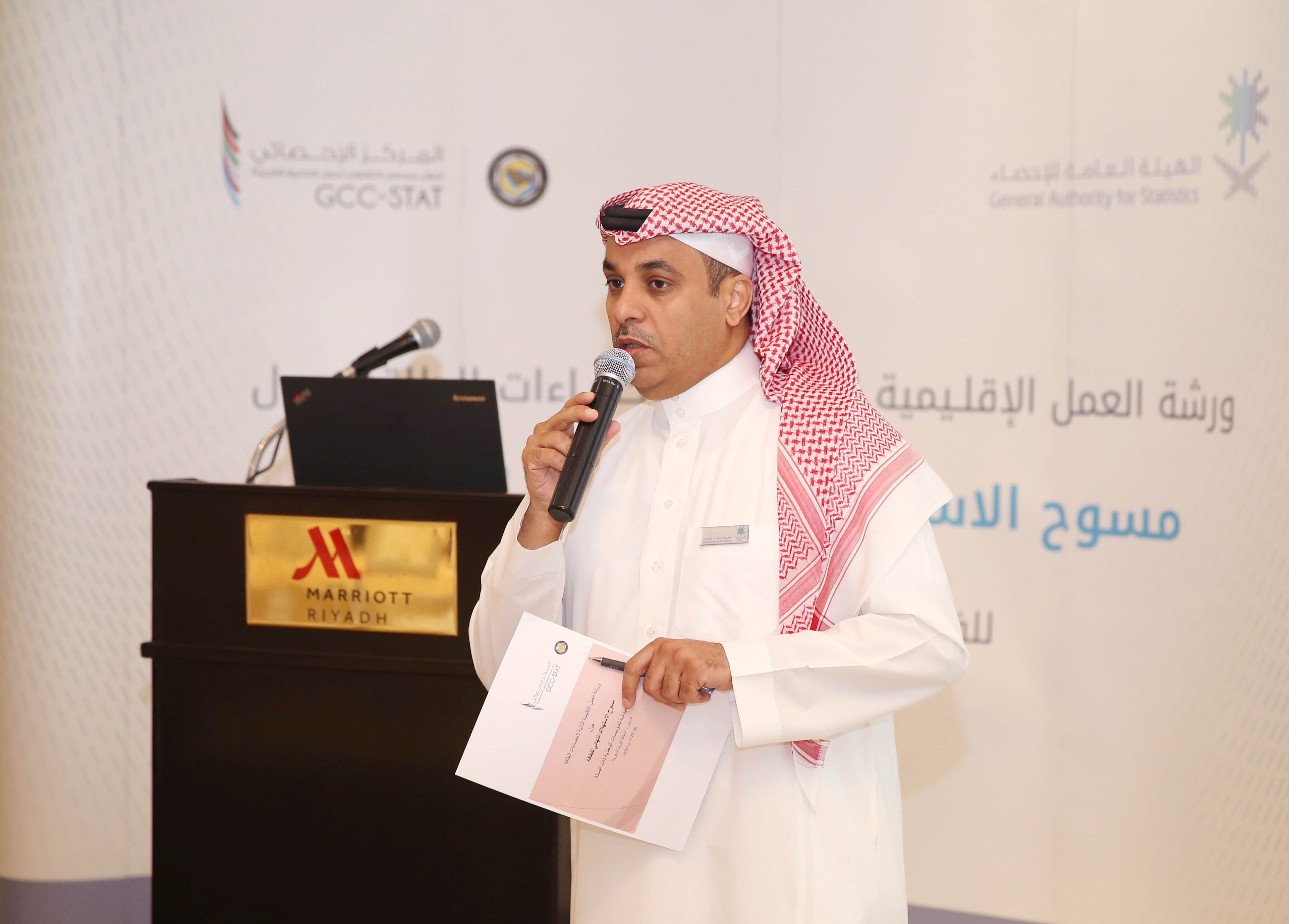
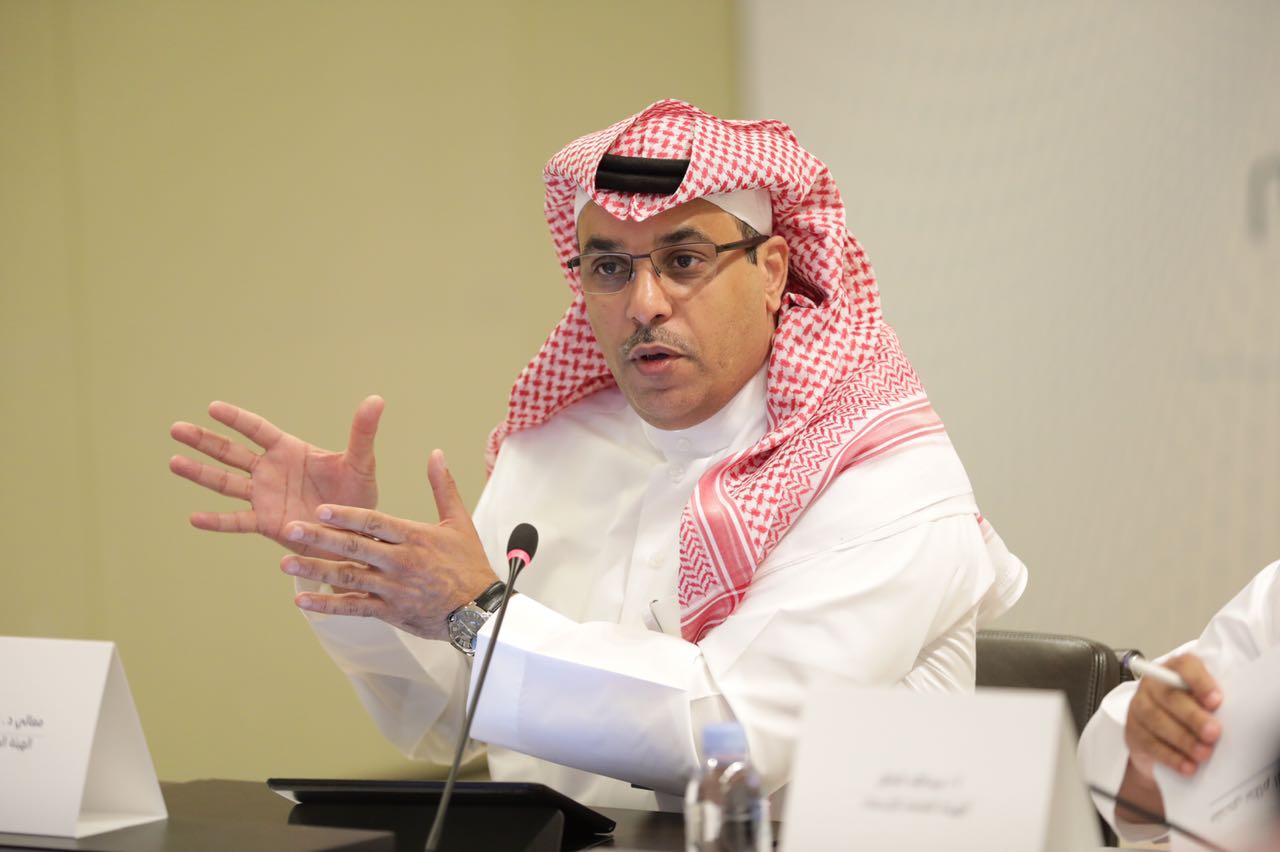
GCC "Energy Statistics" in Riyadh Dr. Altekhaifi: We aim to unify Data producers' Standards to Serve "GCC" Citizens Media center- Riyadh The Chairman of the GCC Statistical center, the Chairman of the General Authority for Statistics in the Kingdom of Saudi Arabia, Dr. Fahad Sulaiman Altekhaifi expressed his thanks and gratitude towards the leaders of the GCC countries for supporting all programs and activities of the "GCC Statistical centre", as a result of their role in supporting all decisions related to the development of GCC nations. Dr. Altekhaifi asserted that the results of the Energy Statistics' Second Regional workshop about the final consumption of energy surveys held in Riyadh city meet the needs of the national and regional policy makers of the energy sector. It will also support everything that would develop the energy sector in GCC countries. Dr. Altekhaifi also added that through this workshop, the GCC statistical centre seeks to strengthen the cooperation between energy statistics producers, and unify the efforts in the used technical standards. In addition, it seeks to implement International standards by all data producers in member countries. Dr. Altekhaifi revealed that the most important role of data producers in this meeting is to reinforce the understanding of the international standards related to energy statistics in the statistics system. In addition, it aims to explain the links between energy data groups and discuss  the user's needs by enhancing the data and its publishing. Moreover, it aims to unify the efforts to raise the awareness about the methodologies needed in preparing energy statistic in the region. Furthermore,  it aims to deepen the participants' understanding of international standards that support energy statistics. Also it clarifies the importance of the final consumption surveys' system. In this workshop the participants reviews the national experiences of the member countries and the importance of the energy final consumption surveys. In addition, the participants visits several energy sector related entities in the kingdom of Saudi Arabia. This workshop continues until  22 March, 2016. It is worth mentioning that The GCC Statistical Centre was established in June 2011 to provide a common official pool of statistics and data for the member states of the GCC. It was also established to support the statistical work of national statistical centers and planning entities in GCC countries.. The Charter was officially endorsed in December 2012 by the GCC Supreme Council (comprised of heads of member states: United Arab Emirates, Kingdom of Bahrain, Kingdom of Saudi Arabia, Sultanate of Oman, State of Qatar and State of Kuwait).
Image Alt Text

Dr. Altekhaifi: We aim to unify Data producers' Standards to Serve "GCC" Citizens

12-09-2017

GCC "Energy Statistics" in Riyadh Dr. Altekhaifi: We aim to unify Data producers' Standards to Serve "GCC" Citizens Media center- Riyadh The Chairman of the GCC Statistical center, the Chairman of the General Authority for Statistics in the Kingdom of Saudi Arabia, Dr. Fahad Sulaiman Altekhaifi expressed his thanks and gratitude towards the leaders of the GCC countries for supporting all programs and activities of the "GCC Statistical centre", as a result of their role in supporting all decisions related to the development of GCC nations. Dr. Altekhaifi asserted that the results of the Energy Statistics' Second Regional workshop about the final consumption of energy surveys held in Riyadh city meet the needs of the national and regional policy makers of the energy sector. It will also support everything that would develop the energy sector in GCC countries. Dr. Altekhaifi also added that through this workshop, the GCC statistical centre seeks to strengthen the cooperation between energy statistics producers, and unify the efforts in the used technical standards. In addition, it seeks to implement International standards by all data producers in member countries. Dr. Altekhaifi revealed that the most important role of data producers in this meeting is to reinforce the understanding of the international standards related to energy statistics in the statistics system. In addition, it aims to explain the links between energy data groups and discuss  the user's needs by enhancing the data and its publishing. Moreover, it aims to unify the efforts to raise the awareness about the methodologies needed in preparing energy statistic in the region. Furthermore,  it aims to deepen the participants' understanding of international standards that support energy statistics. Also it clarifies the importance of the final consumption surveys' system. In this workshop the participants reviews the national experiences of the member countries and the importance of the energy final consumption surveys. In addition, the participants visits several energy sector related entities in the kingdom of Saudi Arabia. This workshop continues until  22 March, 2016. It is worth mentioning that The GCC Statistical Centre was established in June 2011 to provide a common official pool of statistics and data for the member states of the GCC. It was also established to support the statistical work of national statistical centers and planning entities in GCC countries.. The Charter was officially endorsed in December 2012 by the GCC Supreme Council (comprised of heads of member states: United Arab Emirates, Kingdom of Bahrain, Kingdom of Saudi Arabia, Sultanate of Oman, State of Qatar and State of Kuwait).
Image Alt Text

GaStat: Wholesale Price Index Increases in September

12-09-2017

GaStat: Wholesale Price Index Increases in September On Tuesday, the 24th  of Muharram 1438 H/ 25th  of October 2016 AD, the General Authority for Statistics (GaStat) issued the monthly indicator of Saudi wholesale price index for the month of September. It is now published on its website www.stats.gov.sa . The indicator recorded (163.1) with  0.3% increase in September 2016, compared to last month (August) in which it recorded (162.6).The indicator includes ten main sections; Food and living animals section, beverages and tobacco section, raw materials except fuel, mineral fuel and related products section, Fats and oils section, chemical materials and related products, manufactured commodities classified by material section, transportation equipment and machines section, diverse manufactured commodities section, and other commodities section.The report attributed that increase to the rise of three main sections that constitute this indicator; transportation equipment and machines section with (0.9), Food and living animals section with (0.6%), manufactured commodities classified by material section with (0.1%).On the other hand, six sections have decreased: raw materials except fuel section with (1.4%), diverse manufactured commodities section with (0.4%), beverages and tobacco section with (0.3%), Fats and oils section with (0.3%), chemical materials and related products with (0.1%), other commodities with (0.1%), However, the sections of mineral fuel and related products did not change and remained stable.The authority indicated that the Saudi wholesale index measures the average of change in the prices of commodities and services that are sold in the primary markets. What matters here is the price change only. Therefore, the changes that result from the differences in quality, quantity, shipping method, or any other influencing factor in order to get the net price are excluded. This index is provided to everyone, and conducted all over Saudi Arabia.It is worth mentioning that the wholesale price index is used to record any change in the prices of local or imported commodities. In addition to monitoring the price directions and the  status of markets and costs of living. Furthermore, it is used in preparing the national accounts by protecting the income and national aggregates from the influence of price change.
Image Alt Text

GaStat: Wholesale Price Index Increases in September

12-09-2017

GaStat: Wholesale Price Index Increases in September On Tuesday, the 24th  of Muharram 1438 H/ 25th  of October 2016 AD, the General Authority for Statistics (GaStat) issued the monthly indicator of Saudi wholesale price index for the month of September. It is now published on its website www.stats.gov.sa . The indicator recorded (163.1) with  0.3% increase in September 2016, compared to last month (August) in which it recorded (162.6).The indicator includes ten main sections; Food and living animals section, beverages and tobacco section, raw materials except fuel, mineral fuel and related products section, Fats and oils section, chemical materials and related products, manufactured commodities classified by material section, transportation equipment and machines section, diverse manufactured commodities section, and other commodities section.The report attributed that increase to the rise of three main sections that constitute this indicator; transportation equipment and machines section with (0.9), Food and living animals section with (0.6%), manufactured commodities classified by material section with (0.1%).On the other hand, six sections have decreased: raw materials except fuel section with (1.4%), diverse manufactured commodities section with (0.4%), beverages and tobacco section with (0.3%), Fats and oils section with (0.3%), chemical materials and related products with (0.1%), other commodities with (0.1%), However, the sections of mineral fuel and related products did not change and remained stable.The authority indicated that the Saudi wholesale index measures the average of change in the prices of commodities and services that are sold in the primary markets. What matters here is the price change only. Therefore, the changes that result from the differences in quality, quantity, shipping method, or any other influencing factor in order to get the net price are excluded. This index is provided to everyone, and conducted all over Saudi Arabia.It is worth mentioning that the wholesale price index is used to record any change in the prices of local or imported commodities. In addition to monitoring the price directions and the  status of markets and costs of living. Furthermore, it is used in preparing the national accounts by protecting the income and national aggregates from the influence of price change.
Image Alt Text

GaStat Discusses the General Statistics system draft

12-09-2017

In Collaboration with 19 Government Entities to Develop the Statistical Sector GaStat Discusses the General Statistics system draft Within the framework of activating the statistical sector in the Kingdom of Saudi Arabia, the General Authority for Statistics (GaStat) held a workshop on Wednesday, 28 Sha’ban 1438H corresponding to 24 May 2017 with 19 government entities and specialized consultation bodies. The workshop was held to discuss the draft of the general statistics system in preparation for its submission to GaStat’s board of directors then for the concerned entities for approval. H.E. Dr. Fahad Altekhaifi, GaStat President, expressed his gratitude to the workshop participants and asserted that developing the statistical sector is a joint responsibility between relevant entities. He also added that the aim of this workshop is to ensure that the proposed system draft meets all requirements which maximizes its benefit. Furthermore, he explained that the proposed system draft is comprehensive and keeps up with the latest developments in statistical systems in order to activate statistical work and deepen its impact on planning and enhancing statistical awareness. It also regulates the relationship between GaStat, as a supervisor and organizer of the statistical sector in Saudi Arabia, and all constituents of the statistical sector which includes beside GaStat; statistical administrative units in all government entities, private sector and academic sector. GaStat’s President also confirmed that the current system provides a solid structure for statistical work with the amendments that have been made over the past years. The regulation which was issued by the Council of Ministers Decision No. 11 issued in Muharram 13th, 1437H enhanced and completed the process of developing statistical work. The regulation included a number of subjects that covered a group of regulatory provisions and the most important of these subjects: emphasizing that the Authority has a public juridical personality, and a financial and administrative independence, it is the entity in charge of statistical affairs, the only official reference to implement statistical work, and it’s the only technical supervisor and regulator of statistical work, it is managed by a board of directors which by the regulation has the powers and authority on the statistical sector and its components in the Kingdom of Saudi Arabia. The regulation gave the Authority the task of establishing a permanent coordinating committee. It also gave it the responsibility of establishing a central system for information which is connecting electronically with all concerned entities. In addition to implementing statistical work, the regulation also assigned other tasks to the Authority which include: applying recognised international standards which include statistical work methodology, survey design and implementation, conducting research and studies, analyse data and information, all information and data documentation work, collecting statistical data and information that covers all aspects of life in Saudi Arabia from its different sources and classify it and section it, either from surveys and censuses or from administrative records in public entities and private establishments, analyse this data and extract its indicators, prepare evidences and national statistical classifications according to international standards, using it and developing whenever needed, prepare statistical bulletins and reports of surveys and research and publish it. The regulation also gave the Authority the right to provide statistical services, conduct surveys, prepare statistical research and studies, provide data from its databases to establishments and business sector in a commercial manner and shall benefit from its financial revenues in financing statistical and information services provided. In addition, it is responsible of transmitting knowledge and provide recommendations to public entities to develop all information system and statistical work methodology to achieve a comprehensive, accurate and unified statistical system and to develop public awareness of the importance of statistics, and to monitor and follow up all published data on the Kingdom of Saudi Arabia with the competent regional and international bodies and coordination with the concerned entities. This regulation reflects the leadership's keenness to develop the main infrastructure of all development decisions considering that the statistical products and services given by GaStat is a solid base to support all national development decisions and support policymakers with information that is considered as the compass of development work, which makes this regulation an added value at the development level  on one hand and the activation of the national strategy for statistical development on the other.
Image Alt Text

GaStat Discusses the General Statistics system draft

12-09-2017

In Collaboration with 19 Government Entities to Develop the Statistical Sector GaStat Discusses the General Statistics system draft Within the framework of activating the statistical sector in the Kingdom of Saudi Arabia, the General Authority for Statistics (GaStat) held a workshop on Wednesday, 28 Sha’ban 1438H corresponding to 24 May 2017 with 19 government entities and specialized consultation bodies. The workshop was held to discuss the draft of the general statistics system in preparation for its submission to GaStat’s board of directors then for the concerned entities for approval. H.E. Dr. Fahad Altekhaifi, GaStat President, expressed his gratitude to the workshop participants and asserted that developing the statistical sector is a joint responsibility between relevant entities. He also added that the aim of this workshop is to ensure that the proposed system draft meets all requirements which maximizes its benefit. Furthermore, he explained that the proposed system draft is comprehensive and keeps up with the latest developments in statistical systems in order to activate statistical work and deepen its impact on planning and enhancing statistical awareness. It also regulates the relationship between GaStat, as a supervisor and organizer of the statistical sector in Saudi Arabia, and all constituents of the statistical sector which includes beside GaStat; statistical administrative units in all government entities, private sector and academic sector. GaStat’s President also confirmed that the current system provides a solid structure for statistical work with the amendments that have been made over the past years. The regulation which was issued by the Council of Ministers Decision No. 11 issued in Muharram 13th, 1437H enhanced and completed the process of developing statistical work. The regulation included a number of subjects that covered a group of regulatory provisions and the most important of these subjects: emphasizing that the Authority has a public juridical personality, and a financial and administrative independence, it is the entity in charge of statistical affairs, the only official reference to implement statistical work, and it’s the only technical supervisor and regulator of statistical work, it is managed by a board of directors which by the regulation has the powers and authority on the statistical sector and its components in the Kingdom of Saudi Arabia. The regulation gave the Authority the task of establishing a permanent coordinating committee. It also gave it the responsibility of establishing a central system for information which is connecting electronically with all concerned entities. In addition to implementing statistical work, the regulation also assigned other tasks to the Authority which include: applying recognised international standards which include statistical work methodology, survey design and implementation, conducting research and studies, analyse data and information, all information and data documentation work, collecting statistical data and information that covers all aspects of life in Saudi Arabia from its different sources and classify it and section it, either from surveys and censuses or from administrative records in public entities and private establishments, analyse this data and extract its indicators, prepare evidences and national statistical classifications according to international standards, using it and developing whenever needed, prepare statistical bulletins and reports of surveys and research and publish it. The regulation also gave the Authority the right to provide statistical services, conduct surveys, prepare statistical research and studies, provide data from its databases to establishments and business sector in a commercial manner and shall benefit from its financial revenues in financing statistical and information services provided. In addition, it is responsible of transmitting knowledge and provide recommendations to public entities to develop all information system and statistical work methodology to achieve a comprehensive, accurate and unified statistical system and to develop public awareness of the importance of statistics, and to monitor and follow up all published data on the Kingdom of Saudi Arabia with the competent regional and international bodies and coordination with the concerned entities. This regulation reflects the leadership's keenness to develop the main infrastructure of all development decisions considering that the statistical products and services given by GaStat is a solid base to support all national development decisions and support policymakers with information that is considered as the compass of development work, which makes this regulation an added value at the development level  on one hand and the activation of the national strategy for statistical development on the other.
Image Alt Text

Saudi Arabia is “the second country on the Arab world level and the thirty eighth internationally” within the very high-level human development countries

12-09-2017

According to the human development report issued by a UN program with a remarkable progress Saudi Arabia is “the second country on the Arab world level and the thirty eighth internationally” within the very high-level human development countries Saudi Arabia registered the second rank on the Arab world level and the thirty eighth internationally within the very high-level human development countries according to the human development report issued by the UN developmental program 2016. Dr. Fahad bin Sulaiman Altekhaifi, GaStat president, clarified that Saudi Arabia has reached that remarkable progress which was reflected in the human development report issued by the UN developmental program 2016. He added, Saudi Arabia was classified within the countries that have the highest levels of human development.  His Excellency assured that the report is one of the annual reports issued by the UN developmental program since 1990. In addition to the main topics it discusses and resolves annually, the program includes many statistical tables of various indicators, the most important of which is a table that contains the human development guide classified by the level of human development all over the world. This guide is considered a standard that summarizes all achievements in the field of development through three main dimensions: individual health life, knowledge acquisition, and the proper living standard.  He indicated that this improvement in the Saudi level of human development is continuous one. During the past three years, Saudi Arabia registered the (39th) rank last year, the (55th) rank in 2010, and the (77th) rank in 2005. This progress is attributed to the noticeable improvement in all elements of the human development guide which are represented in the expected age of birth, the expected average of studying years which means the expected number of studying years that a child is expected to spend since he/she starts going to school, supposing that the rates of this process by age groups remain stable during all times. The guide elements also include the gross national income per capita which is calculated by the purchase power rate in Dollar.  It is worth mentioning that the human development report divides the world into four groups by value of human development guide’s indicator. Countries with low-level human development have a value of (0R550), whereas countries with intermediate-level human development, their value ranges between (0R550) and (0R699). However, countries with high-level human development have a guide value that ranges between (0R700) and (0R799), and countries with a very high-level of human development have a value of (0R800) or more. The Saudi indicator mentioned in the 2016 report registered (0R847).  Dr. Fahad stressed that this report reflects the level of human development that Saudi Arabia witnesses in many fields. It shows the exerted efforts on many levels. These efforts were achieved as a response to the continuous directions of the custodian of the two holly mosques, his crown prince, and his deputy crown prince. It also reflects the goals upon which the 2030 Saudi vision is made, the vision that represents a promising document that aims at achieving the sustainable development and coping with all rapid developmental changes internationally.
Image Alt Text

Saudi Arabia is “the second country on the Arab world level and the thirty eighth internationally” within the very high-level human development countries

12-09-2017

According to the human development report issued by a UN program with a remarkable progress Saudi Arabia is “the second country on the Arab world level and the thirty eighth internationally” within the very high-level human development countries Saudi Arabia registered the second rank on the Arab world level and the thirty eighth internationally within the very high-level human development countries according to the human development report issued by the UN developmental program 2016. Dr. Fahad bin Sulaiman Altekhaifi, GaStat president, clarified that Saudi Arabia has reached that remarkable progress which was reflected in the human development report issued by the UN developmental program 2016. He added, Saudi Arabia was classified within the countries that have the highest levels of human development.  His Excellency assured that the report is one of the annual reports issued by the UN developmental program since 1990. In addition to the main topics it discusses and resolves annually, the program includes many statistical tables of various indicators, the most important of which is a table that contains the human development guide classified by the level of human development all over the world. This guide is considered a standard that summarizes all achievements in the field of development through three main dimensions: individual health life, knowledge acquisition, and the proper living standard.  He indicated that this improvement in the Saudi level of human development is continuous one. During the past three years, Saudi Arabia registered the (39th) rank last year, the (55th) rank in 2010, and the (77th) rank in 2005. This progress is attributed to the noticeable improvement in all elements of the human development guide which are represented in the expected age of birth, the expected average of studying years which means the expected number of studying years that a child is expected to spend since he/she starts going to school, supposing that the rates of this process by age groups remain stable during all times. The guide elements also include the gross national income per capita which is calculated by the purchase power rate in Dollar.  It is worth mentioning that the human development report divides the world into four groups by value of human development guide’s indicator. Countries with low-level human development have a value of (0R550), whereas countries with intermediate-level human development, their value ranges between (0R550) and (0R699). However, countries with high-level human development have a guide value that ranges between (0R700) and (0R799), and countries with a very high-level of human development have a value of (0R800) or more. The Saudi indicator mentioned in the 2016 report registered (0R847).  Dr. Fahad stressed that this report reflects the level of human development that Saudi Arabia witnesses in many fields. It shows the exerted efforts on many levels. These efforts were achieved as a response to the continuous directions of the custodian of the two holly mosques, his crown prince, and his deputy crown prince. It also reflects the goals upon which the 2030 Saudi vision is made, the vision that represents a promising document that aims at achieving the sustainable development and coping with all rapid developmental changes internationally.
Image Alt Text

Dr. Altekhaifi: We aim to unify Data producers' Standards to Serve "GCC" Citizens

12-09-2017

GCC "Energy Statistics" in Riyadh Dr. Altekhaifi: We aim to unify Data producers' Standards to Serve "GCC" Citizens Media center- Riyadh The Chairman of the GCC Statistical center, the Chairman of the General Authority for Statistics in the Kingdom of Saudi Arabia, Dr. Fahad Sulaiman Altekhaifi expressed his thanks and gratitude towards the leaders of the GCC countries for supporting all programs and activities of the "GCC Statistical centre", as a result of their role in supporting all decisions related to the development of GCC nations. Dr. Altekhaifi asserted that the results of the Energy Statistics' Second Regional workshop about the final consumption of energy surveys held in Riyadh city meet the needs of the national and regional policy makers of the energy sector. It will also support everything that would develop the energy sector in GCC countries. Dr. Altekhaifi also added that through this workshop, the GCC statistical centre seeks to strengthen the cooperation between energy statistics producers, and unify the efforts in the used technical standards. In addition, it seeks to implement International standards by all data producers in member countries. Dr. Altekhaifi revealed that the most important role of data producers in this meeting is to reinforce the understanding of the international standards related to energy statistics in the statistics system. In addition, it aims to explain the links between energy data groups and discuss  the user's needs by enhancing the data and its publishing. Moreover, it aims to unify the efforts to raise the awareness about the methodologies needed in preparing energy statistic in the region. Furthermore,  it aims to deepen the participants' understanding of international standards that support energy statistics. Also it clarifies the importance of the final consumption surveys' system. In this workshop the participants reviews the national experiences of the member countries and the importance of the energy final consumption surveys. In addition, the participants visits several energy sector related entities in the kingdom of Saudi Arabia. This workshop continues until  22 March, 2016. It is worth mentioning that The GCC Statistical Centre was established in June 2011 to provide a common official pool of statistics and data for the member states of the GCC. It was also established to support the statistical work of national statistical centers and planning entities in GCC countries.. The Charter was officially endorsed in December 2012 by the GCC Supreme Council (comprised of heads of member states: United Arab Emirates, Kingdom of Bahrain, Kingdom of Saudi Arabia, Sultanate of Oman, State of Qatar and State of Kuwait).
Image Alt Text

GaStat: Wholesale Price Index Increases in September

12-09-2017

GaStat: Wholesale Price Index Increases in September On Tuesday, the 24th  of Muharram 1438 H/ 25th  of October 2016 AD, the General Authority for Statistics (GaStat) issued the monthly indicator of Saudi wholesale price index for the month of September. It is now published on its website www.stats.gov.sa . The indicator recorded (163.1) with  0.3% increase in September 2016, compared to last month (August) in which it recorded (162.6).The indicator includes ten main sections; Food and living animals section, beverages and tobacco section, raw materials except fuel, mineral fuel and related products section, Fats and oils section, chemical materials and related products, manufactured commodities classified by material section, transportation equipment and machines section, diverse manufactured commodities section, and other commodities section.The report attributed that increase to the rise of three main sections that constitute this indicator; transportation equipment and machines section with (0.9), Food and living animals section with (0.6%), manufactured commodities classified by material section with (0.1%).On the other hand, six sections have decreased: raw materials except fuel section with (1.4%), diverse manufactured commodities section with (0.4%), beverages and tobacco section with (0.3%), Fats and oils section with (0.3%), chemical materials and related products with (0.1%), other commodities with (0.1%), However, the sections of mineral fuel and related products did not change and remained stable.The authority indicated that the Saudi wholesale index measures the average of change in the prices of commodities and services that are sold in the primary markets. What matters here is the price change only. Therefore, the changes that result from the differences in quality, quantity, shipping method, or any other influencing factor in order to get the net price are excluded. This index is provided to everyone, and conducted all over Saudi Arabia.It is worth mentioning that the wholesale price index is used to record any change in the prices of local or imported commodities. In addition to monitoring the price directions and the  status of markets and costs of living. Furthermore, it is used in preparing the national accounts by protecting the income and national aggregates from the influence of price change.
Image Alt Text

GaStat Discusses the General Statistics system draft

12-09-2017

In Collaboration with 19 Government Entities to Develop the Statistical Sector GaStat Discusses the General Statistics system draft Within the framework of activating the statistical sector in the Kingdom of Saudi Arabia, the General Authority for Statistics (GaStat) held a workshop on Wednesday, 28 Sha’ban 1438H corresponding to 24 May 2017 with 19 government entities and specialized consultation bodies. The workshop was held to discuss the draft of the general statistics system in preparation for its submission to GaStat’s board of directors then for the concerned entities for approval. H.E. Dr. Fahad Altekhaifi, GaStat President, expressed his gratitude to the workshop participants and asserted that developing the statistical sector is a joint responsibility between relevant entities. He also added that the aim of this workshop is to ensure that the proposed system draft meets all requirements which maximizes its benefit. Furthermore, he explained that the proposed system draft is comprehensive and keeps up with the latest developments in statistical systems in order to activate statistical work and deepen its impact on planning and enhancing statistical awareness. It also regulates the relationship between GaStat, as a supervisor and organizer of the statistical sector in Saudi Arabia, and all constituents of the statistical sector which includes beside GaStat; statistical administrative units in all government entities, private sector and academic sector. GaStat’s President also confirmed that the current system provides a solid structure for statistical work with the amendments that have been made over the past years. The regulation which was issued by the Council of Ministers Decision No. 11 issued in Muharram 13th, 1437H enhanced and completed the process of developing statistical work. The regulation included a number of subjects that covered a group of regulatory provisions and the most important of these subjects: emphasizing that the Authority has a public juridical personality, and a financial and administrative independence, it is the entity in charge of statistical affairs, the only official reference to implement statistical work, and it’s the only technical supervisor and regulator of statistical work, it is managed by a board of directors which by the regulation has the powers and authority on the statistical sector and its components in the Kingdom of Saudi Arabia. The regulation gave the Authority the task of establishing a permanent coordinating committee. It also gave it the responsibility of establishing a central system for information which is connecting electronically with all concerned entities. In addition to implementing statistical work, the regulation also assigned other tasks to the Authority which include: applying recognised international standards which include statistical work methodology, survey design and implementation, conducting research and studies, analyse data and information, all information and data documentation work, collecting statistical data and information that covers all aspects of life in Saudi Arabia from its different sources and classify it and section it, either from surveys and censuses or from administrative records in public entities and private establishments, analyse this data and extract its indicators, prepare evidences and national statistical classifications according to international standards, using it and developing whenever needed, prepare statistical bulletins and reports of surveys and research and publish it. The regulation also gave the Authority the right to provide statistical services, conduct surveys, prepare statistical research and studies, provide data from its databases to establishments and business sector in a commercial manner and shall benefit from its financial revenues in financing statistical and information services provided. In addition, it is responsible of transmitting knowledge and provide recommendations to public entities to develop all information system and statistical work methodology to achieve a comprehensive, accurate and unified statistical system and to develop public awareness of the importance of statistics, and to monitor and follow up all published data on the Kingdom of Saudi Arabia with the competent regional and international bodies and coordination with the concerned entities. This regulation reflects the leadership's keenness to develop the main infrastructure of all development decisions considering that the statistical products and services given by GaStat is a solid base to support all national development decisions and support policymakers with information that is considered as the compass of development work, which makes this regulation an added value at the development level  on one hand and the activation of the national strategy for statistical development on the other.
Image Alt Text

Saudi Arabia is “the second country on the Arab world level and the thirty eighth internationally” within the very high-level human development countries

12-09-2017

According to the human development report issued by a UN program with a remarkable progress Saudi Arabia is “the second country on the Arab world level and the thirty eighth internationally” within the very high-level human development countries Saudi Arabia registered the second rank on the Arab world level and the thirty eighth internationally within the very high-level human development countries according to the human development report issued by the UN developmental program 2016. Dr. Fahad bin Sulaiman Altekhaifi, GaStat president, clarified that Saudi Arabia has reached that remarkable progress which was reflected in the human development report issued by the UN developmental program 2016. He added, Saudi Arabia was classified within the countries that have the highest levels of human development.  His Excellency assured that the report is one of the annual reports issued by the UN developmental program since 1990. In addition to the main topics it discusses and resolves annually, the program includes many statistical tables of various indicators, the most important of which is a table that contains the human development guide classified by the level of human development all over the world. This guide is considered a standard that summarizes all achievements in the field of development through three main dimensions: individual health life, knowledge acquisition, and the proper living standard.  He indicated that this improvement in the Saudi level of human development is continuous one. During the past three years, Saudi Arabia registered the (39th) rank last year, the (55th) rank in 2010, and the (77th) rank in 2005. This progress is attributed to the noticeable improvement in all elements of the human development guide which are represented in the expected age of birth, the expected average of studying years which means the expected number of studying years that a child is expected to spend since he/she starts going to school, supposing that the rates of this process by age groups remain stable during all times. The guide elements also include the gross national income per capita which is calculated by the purchase power rate in Dollar.  It is worth mentioning that the human development report divides the world into four groups by value of human development guide’s indicator. Countries with low-level human development have a value of (0R550), whereas countries with intermediate-level human development, their value ranges between (0R550) and (0R699). However, countries with high-level human development have a guide value that ranges between (0R700) and (0R799), and countries with a very high-level of human development have a value of (0R800) or more. The Saudi indicator mentioned in the 2016 report registered (0R847).  Dr. Fahad stressed that this report reflects the level of human development that Saudi Arabia witnesses in many fields. It shows the exerted efforts on many levels. These efforts were achieved as a response to the continuous directions of the custodian of the two holly mosques, his crown prince, and his deputy crown prince. It also reflects the goals upon which the 2030 Saudi vision is made, the vision that represents a promising document that aims at achieving the sustainable development and coping with all rapid developmental changes internationally.
Sort